Table of Contents
- How Public Fast Chargers Differ from Home Charging
- Australia’s Major Public Fast Charging Networks
- Public Charging Costs Compared to Home Charging
- Impact on Your EV Battery
- Impact on Australia’s Power Grid
- Australia’s Expanding Charging Infrastructure
- Cross-Country Travel Is Now Reality
- The Complete Charging Solution
Considering an electric vehicle but concerned about charging away from home? You’re not alone. Whilst home charging with smart solutions like the Raedian NEO handles 90 per cent of your daily needs, understanding public fast chargers opens up limitless possibilities for longer journeys across Australia.
This guide explains everything you need to know about public fast charging—from how it differs from your home setup to the costs involved and what it means for your EV’s battery health.
How Public Fast Chargers Differ from Home Charging
The fundamental difference between public fast chargers and home charging comes down to power delivery and charging speed.
Your home charger delivers AC (alternating current) power at 7 to 22 kilowatts, whether it’s a standard Level 1 unit or a Level 2 smart charger like the Raedian NEO. This slower, gentler approach works perfectly for overnight charging whilst you sleep or during daylight hours when your solar panels generate excess energy.
Public fast chargers use DC (direct current) technology that bypasses your vehicle’s onboard converter and feeds power directly to the battery. This enables charging speeds of 50 to 350 kilowatts, adding 150 to 350 kilometres of range in just 15 to 30 minutes.
Home charging typically adds 10 to 40 kilometres of range per hour, meaning an empty 60kWh battery might take 8 to 12 hours to fully charge. A 50kW public fast charger achieves the same result in around one hour, whilst a 350kW ultra-rapid charger reaches 80 per cent in under 20 minutes.
Australia’s Major Public Fast Charging Networks
Australia’s public charging landscape has transformed dramatically in recent years, with several key players establishing comprehensive networks nationwide.
Chargefox
Chargefox operates Australia’s largest and fastest-growing charging network, with thousands of charging plugs available nationwide. Owned by motoring clubs including NRMA, RACV, RACQ, RAA, RAC, and RACT, Chargefox adds over 100 new plugs monthly and has facilitated more than 5 million charging sessions. Their network offers competitive pricing at approximately $0.45 per kWh for 50kW DC charging. Visit chargefox.com to locate chargers and download their app.
Evie Networks
Evie Networks has established itself as Australia’s second-largest fast charging provider, with over 300 locations featuring exclusively DC fast chargers ranging from 50kW to 350kW ultra-rapid units. Their distinctive teal-painted parking spaces are powered by 100 per cent renewable energy and typically cost $0.45/kWh for standard fast charging or $0.60/kWh for ultra-rapid 350kW charging. Evie partners with major fuel retailers including Ampol, Shell Coles Express, and Puma Energy, as well as fast food chains like McDonald’s and Hungry Jacks. Explore their network at evie.com.au.
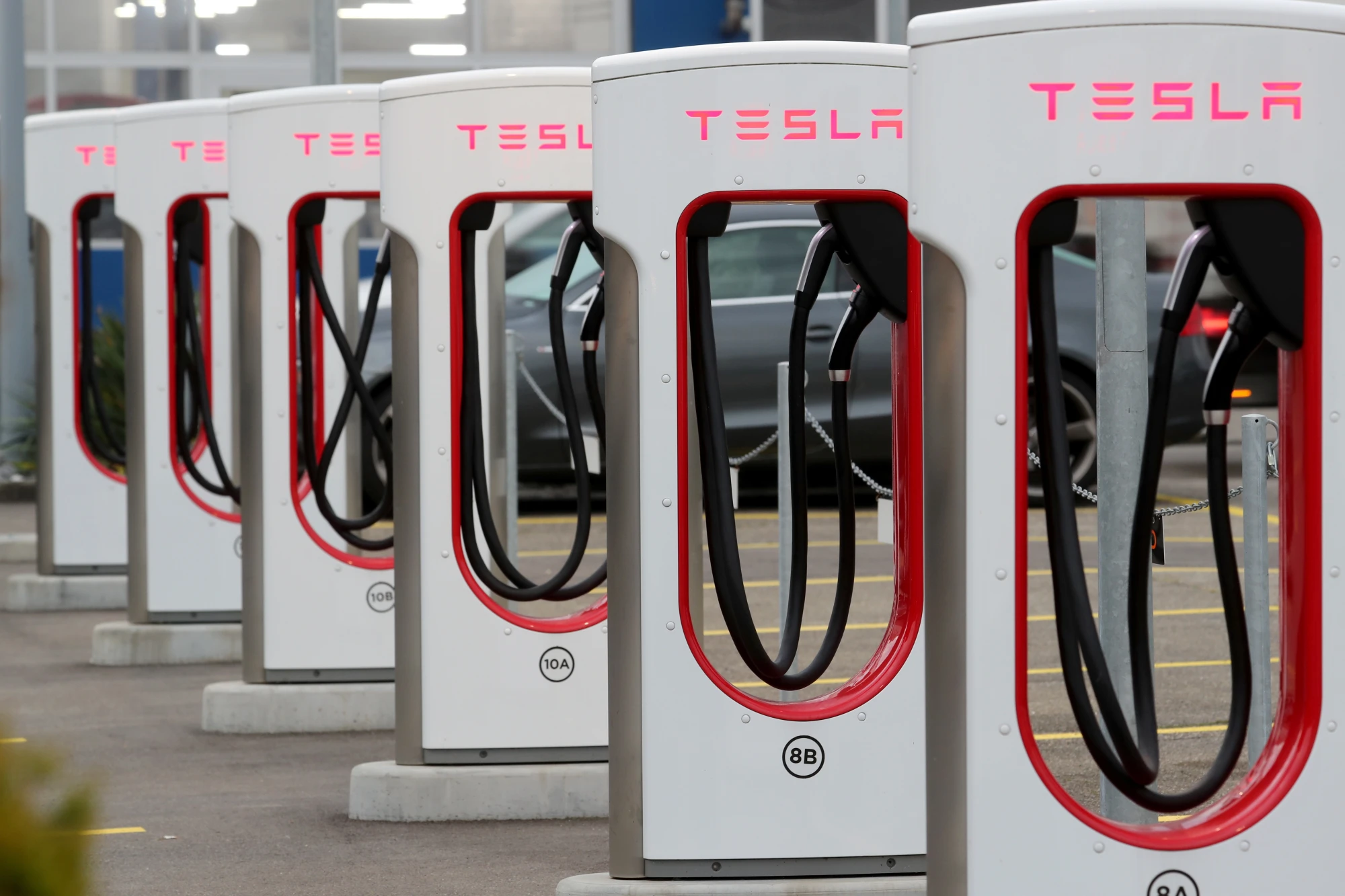
Tesla Supercharger Network
Tesla Supercharger Network remains the benchmark for charging speed and reliability, with strategic locations connecting all Australian states except the Northern Territory. Whilst primarily designed for Tesla vehicles, select locations now accommodate other EV brands at premium rates. Tesla owners benefit from variable pricing based on time and demand, whilst non-Tesla drivers can access the network through a monthly subscription for reduced costs.
NRMA Electric
NRMA Electric operates the largest regional fast charging network in Australia, with particular focus on connecting rural and remote communities. As part of the federal government’s Driving the Nation Fund, NRMA is delivering 117 charging stations on key highway routes at average intervals of 150 kilometres, creating a backbone network connecting all capital cities.
bp pulse and Other Networks
bp pulse brings global charging expertise to Australia with ambitious plans to install 600 charge points across the country by 2025 as part of their worldwide rollout of 100,000 charging points by 2030. Their sites typically feature multiple high-powered chargers at convenient locations.
Other notable networks include Ampol, JET Charge, EVX, EVSE Australia, and state-specific providers like Western Australia’s Synergy and Horizon Power networks, which have created Australia’s longest connected EV highway spanning 7,000 kilometres.
Public Charging Costs Compared to Home Charging
Understanding the cost difference between public fast charging and home charging helps you make smarter decisions about when and where to charge your EV.
Public DC fast charging typically costs between $0.45 and $0.60 per kilowatt-hour, depending on the network and charger speed. At $0.50/kWh, filling a depleted 60kWh battery would cost around $30. Some networks charge by time rather than energy delivered, which can benefit vehicles with faster charging capabilities.
Home charging during off-peak periods (typically 10pm to 7am) costs between $0.20 and $0.30 per kWh, making the same 60kWh charge-up cost just $12 to $18. That’s a saving of 40 to 60 per cent compared to public fast charging.
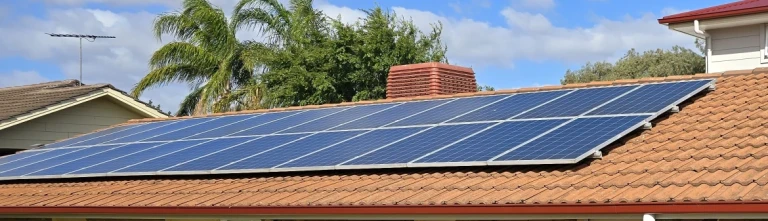
Solar-powered home charging is the ultimate winner. If you have solar panels installed and charge during daylight hours, you can harness surplus solar energy at virtually no cost. The Raedian NEO excels at this with its solar-only charging mode that prioritises renewable energy, ensuring you’re charging exclusively from the sun when generation allows. This reduces your charging costs to near zero, making each kilometre you drive essentially free.
For most Australian EV owners, the strategy is clear: use your home charger for daily needs and reserve public fast charging for longer journeys or emergency top-ups. This approach maximises cost savings whilst maintaining complete flexibility for road trips.
Some shopping centres, councils, and businesses offer free AC charging, though these slower chargers typically add only 10 to 20 kilometres of range per hour. Whilst parking fees may apply, the electricity itself costs nothing.
Impact on Your EV Battery
One of the most common concerns about fast charging is its potential impact on battery longevity. The good news? Modern EVs are engineered to handle fast charging with minimal long-term effects.
What the Research Shows
Multiple independent studies have examined the relationship between DC fast charging and battery degradation. Research by Geotab, one of the world’s leading telematics companies, analysed real-world EV usage over two years and found that vehicles using fast charging more than three times per month experienced only 0.1 per cent additional battery degradation compared to those that never fast charged. That’s a negligible difference in practical terms.
A separate study by Recurrent Motors analysed over 12,500 Tesla vehicles and found no significant difference in battery capacity loss between vehicles that fast charged more than 90 per cent of the time and those that fast charged less than 10 per cent of the time.
How Modern EVs Protect Your Battery
The reason modern EVs handle fast charging so well comes down to sophisticated battery management systems (BMS) and thermal management technology. Every contemporary EV monitors battery temperature, voltage, and current in real-time, automatically adjusting charging rates to keep everything within safe parameters.
If battery temperature rises too high, the system activates cooling mechanisms or reduces charging speed to protect battery health. Most EVs also employ a charging curve that tapers power delivery as the battery approaches full capacity—charging from 10 to 80 per cent happens much faster than charging from 80 to 100 per cent.
Best Practices for Battery Longevity
To maximise your battery’s lifespan, follow these best practices:
- Keep your battery charge between 20 and 80 per cent for daily use
- Avoid frequent fast charging when your battery is very hot or very cold
- Park in shaded areas during summer months
- Use home charging for regular daily needs
- Reserve fast charging for longer journeys or when time is limited
- Allow your battery to cool after a long drive before fast charging
With proper care, modern EV batteries retain approximately 90 per cent of their capacity after eight to ten years of regular use, regardless of whether you occasionally use fast charging or stick exclusively to slower home charging.
Impact on Australia’s Power Grid
As EV adoption accelerates, questions naturally arise about the impact of charging infrastructure on Australia’s electricity grid. The reality is more nuanced and optimistic than many fear.
Public fast chargers represent a relatively small proportion of total EV charging. Most EV owners charge at home overnight, spreading the load across off-peak periods when grid demand is naturally lower. This actually helps utilities by improving capacity utilisation during traditionally quiet hours.
Fast charging stations are strategically located and connected to the grid with sufficient capacity planning. Network operators work closely with distribution service providers to ensure adequate supply before installation. Many newer fast charging sites incorporate battery storage systems that charge during low-demand periods and discharge during peak usage, further smoothing grid impact.
Several Australian fast charging networks, including Evie Networks, commit to powering their chargers with 100 per cent renewable energy through power purchase agreements. Western Australia’s remote charging locations even use standalone solar and battery systems, completely independent of the main grid.
Looking ahead, vehicle-to-grid (V2G) technology promises to transform EVs from grid consumers into mobile energy storage assets. When connected to bidirectional chargers, EVs can feed electricity back to the grid during peak demand periods, helping stabilise the network whilst earning owners credits on their energy bills. The Raedian NORA portable charger is positioned to support such bidirectional capabilities as the technology matures in Australia.
The Australian Energy Market Operator projects that even with aggressive EV uptake reaching 50 per cent of the vehicle fleet by 2030, the additional electricity demand would represent only 7 to 9 per cent of total grid consumption. Smart charging strategies and renewable energy integration will comfortably accommodate this growth.
Australia’s Expanding Charging Infrastructure
The transformation of Australia’s EV charging landscape over the past two years has been remarkable, and the momentum shows no signs of slowing.
As of October 2025, Australia boasts 1,272 public fast charging locations with over 3,436 individual plugs nationwide. This represents an 8.5 per cent quarterly growth rate, with more than 800 high-powered charging plugs added in the first half of 2025 alone. New South Wales leads infrastructure deployment with 357 charging locations, followed by Victoria with 311.
The federal government has committed unprecedented investment through the $475 million Driving the Nation Fund, targeting the installation of up to 10,000 public chargers across Australia. This multi-faceted programme includes $39.3 million for the NRMA to establish 117 fast charging stations along key highway routes, connecting all capital cities at average intervals of 150 kilometres.
An additional $60 million supports charging infrastructure at automotive dealerships and repair facilities through the DRIVEN Programme, helping normalise EV charging within existing automotive service networks. ARENA (Australian Renewable Energy Agency) is investing $100 million in heavy vehicle charging infrastructure and light vehicle charging innovation.
Western Australia has made history by completing Australia’s longest connected EV highway network. Spanning 7,000 kilometres from Mundrabilla in the south to Kununurra in the north, the network features 110 charging points across 49 locations, spaced approximately 200 kilometres apart. International media including the BBC and New York Times have highlighted this achievement, positioning Western Australia as a must-visit destination for sustainable tourism.
State governments continue to step up their commitments. New South Wales has allocated $16.1 million for an additional 246 fast and ultra-fast chargers in partnership with Tesla, bp, NRMA, Energy Australia, and Plus ES. All new chargers backed by this funding will be powered by renewable energy and designed to charge suitable EVs from 10 to 80 per cent in 10 to 15 minutes.
The focus extends beyond highways. A $40 million federal investment targets urban charging solutions, including kerbside chargers mounted on existing electricity poles and infrastructure for apartment buildings. This addresses one of the most significant barriers to EV adoption for the 30 per cent of Australians living in multi-unit dwellings.
Cross-Country Travel Is Now Reality
The question has shifted from “Can I drive an EV across Australia?” to “Which route should I take?” The infrastructure buildout has reached a tipping point where genuine long-distance travel is not just possible but practical and stress-free.
You can now drive from Melbourne to Brisbane, Sydney to Adelaide, or Perth to Kununurra with confidence, knowing that fast charging infrastructure awaits at regular intervals. The NRMA’s backbone network ensures no capital city remains isolated, whilst regional networks fill in the gaps.
Popular tourist routes have received particular attention. The Great Ocean Road, Pacific Highway, and routes through regional wine regions all feature multiple fast charging options. Even remote destinations like Uluru and the Kimberley are becoming accessible to EV travellers.
Modern EVs with 400 to 600 kilometres of real-world range mean you’re typically stopping for charging every two to three hours of driving, which naturally aligns with recommended breaks for safety and comfort. The 15 to 30 minutes required for an 80 per cent fast charge gives you time to grab a coffee, use facilities, and stretch your legs before continuing your journey.
Planning tools make route finding simple. The Charge@Large app provides real-time status tracking for 2,100 charging units across nine networks, whilst PlugShare offers user reviews and photos of charging locations. Most modern EVs include built-in navigation that automatically plans charging stops based on your battery level and route.
Experts estimate that Australia will need an additional 27,500 public EV chargers by 2033 to meet growing demand. Current trends suggest this target is achievable, with private investment complementing government funding. Major retailers including Woolworths and Coles are installing chargers in supermarket car parks, whilst service station operators recognise EVs as the future of transport.
The Complete Charging Solution
Understanding public fast chargers empowers you to embrace electric vehicle ownership without compromise. For daily driving, nothing beats the convenience and economy of home charging with solutions like the Raedian NEO, particularly when paired with solar panels. For longer journeys, Australia’s expanding network of public fast chargers provides the flexibility and speed to travel anywhere across this vast continent.
Battery concerns are largely unfounded thanks to sophisticated thermal management and battery protection systems in modern EVs. The minimal impact of occasional fast charging on battery longevity shouldn’t deter you from using public chargers when needed. The power grid is adapting well to increased demand, supported by smart charging strategies, renewable energy integration, and battery storage solutions.
The rapid expansion of charging infrastructure, backed by hundreds of millions in government investment and private sector commitment, demonstrates Australia’s serious commitment to electric mobility. What seemed impossible just five years ago is now routine: driving coast to coast in an electric vehicle, powered by increasingly renewable energy sources.
Ready to make the switch to electric? Explore Charge Wise’s range of smart EV chargers to set up your home charging solution. With options like the solar-smart Raedian NEO for fixed installation or the versatile Raedian NORA portable charger, you’ll have everything you need to charge at home whilst having the confidence of Australia’s growing public network for those longer adventures.
The future of driving is electric, solar-powered, and ready to take you anywhere in Australia.