Tethered vs Untethered EV Chargers: Which Is Right for Your Home?
Short answer: A tethered EV charger has the Type 2 cable permanently attached, so you just pull up and plug in. An untethered (socket) charger has no cable, so you plug in your own Type 2 cable each time. Tethered suits most homes with one EV and a regular parking spot. Untethered suits multi-car households, people who expect to move, or anyone after the lower upfront price.
Installing a home EV charger is one of the best investments for Australian EV owners. But before you commit, you need to make one crucial decision: tethered or untethered?
This choice affects your daily routine, long-term costs, and flexibility. Get it right, and you’ll enjoy effortless charging for years. Get it wrong, and you might regret it after installation.
Let’s break down both options so you can make an informed decision for your home.
What’s the Key Difference?
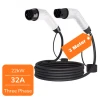
Tethered charger: Cable permanently attached to the unit. Plug into your car and go.
Untethered charger: No built-in cable. You supply your own Type 2 cable and store it separately.
The RAEDIAN NEO from Charge Wise is a tethered charger with a 5 metre Type 2 cable. Going untethered? Pair your socket charger with one of our Type 2 charging cables.
Quick Comparison Table
| Factor | Tethered | Untethered |
|---|---|---|
| Convenience | Excellent | Good |
| Upfront Cost | Higher | Lower |
| Cable Reach | Longer (5-7.5m) | Variable |
| Flexibility | Limited | High |
| Repair Costs | Higher | Lower |
| Design | Bulkier | Compact |
Tethered Chargers: Maximum Convenience
The Pros
- Plug and charge: Pull into your driveway and plug in. No hunting for cables or managing extra steps.
- Always ready: The cable stays mounted and weather-protected. No risk of forgetting it.
- Longer reach: Tethered chargers typically come with 5-7.5 metre cables, giving you more parking flexibility.
- Less wear: You only connect/disconnect at your vehicle’s port, not at both ends. Better for long-term durability.
The Cons
- Higher upfront cost: You’re paying for the integrated cable. Budget an extra $200-$400 versus untethered models.
- Expensive to repair: If the cable gets damaged, professional replacement can be pricey. You can’t just swap in a new portable cable.
- Fixed cable length: Stuck with whatever length comes standard. Can’t adjust if your parking situation changes.
- Bulkier design: The cable storage makes these units larger and more visible on your wall.
Untethered Chargers: Maximum Flexibility
The Pros
- Lower purchase price: Save $200-$400 upfront. Ideal if you already own a Type 2 cable.
- Compact and sleek: Smaller footprint. Better if aesthetics or wall space matter to you.
- Cable flexibility: Use different cables for different situations. Keep a short one for daily charging, a longer one for reach.
- Future-proof: If you upgrade vehicles or need adapters, you just swap cables, not the entire charger.
- Portable: Bring your cable when visiting family or friends who have compatible chargers.
The Cons
- Extra steps each time: Retrieve the cable, plug both ends, unplug and store. Takes a couple of minutes per session.
- Storage hassle: Need a dedicated spot in your garage, car, or shed. Cables on the ground become tripping hazards.
- Risk of forgetting: Store your cable in your car and use it elsewhere? You might forget to bring it home.
- Shorter default cables: EV-included cables are typically shorter than tethered charger cables. May need to buy a longer one.
What Do Most Australian Homeowners Choose?
In Australia, tethered chargers dominate residential installations. Daily commuters who charge every night love the convenience factor.
Untethered chargers appeal to people who value flexibility: multiple vehicle owners, those who change cars frequently, or anyone prioritising aesthetics and lower upfront cost.
Commercial and workplace chargers lean untethered because they serve diverse vehicles and the shared-use model suits plug-and-unplug routines.
How to Decide: 5 Key Questions
1. How Often Will You Charge?
Daily or multiple times a week? The convenience of tethered adds up. Those few extra seconds multiply across hundreds of sessions annually.
Occasional charging? Untethered’s lower cost might make more sense.
2. Where Do You Park?
Is your parking spot consistently close to where you’ll install the charger? Either option works if it is.
Variable parking or more distance? Tethered’s longer cables (5-7.5m) handle reach better than typical portable cables (around 5m).
3. What’s Your Budget?
Tethered typically costs $200-$400 more. If you already own a quality Type 2 cable, untethered saves money immediately.
Don’t forget potential future cable replacement costs. Permanently attached cables can be expensive to repair or replace.
4. Will You Keep This EV Long-Term?
Planning to drive the same car for years? Tethered’s convenience shines.
Upgrading vehicles regularly? Untethered’s flexibility means you adapt to new cable needs without replacing the charger. All modern Australian EVs use Type 2, but untethered still offers peace of mind.
5. Who Will Use This Charger?
Sharing with neighbours or family driving different EVs? Untethered makes this easier. Each person brings their own cable.
Solo vehicle charging? Either option works equally well.
Solar Charging Works with Both
Whether you choose tethered or untethered, all the smart features work identically. Solar-optimised charging, dynamic load balancing, app control, and off-peak scheduling function the same with either cable setup.
The RAEDIAN NEO from Charge Wise is a tethered charger with a 5 metre Type 2 cable and includes full solar integration and smart charging features.
Decision Framework
Choose tethered if:
- You charge daily or multiple times weekly
- Convenience is your top priority
- You’ll keep this EV long-term
- You need extended cable reach
- Budget allows for higher upfront cost
Choose untethered if:
- You already own a Type 2 cable
- Budget is your primary concern
- You like minimalist design
- You change vehicles regularly
- You value maximum flexibility
Get Expert Advice
Still uncertain? An experienced EV charging specialist can make a huge difference. They’ll assess your parking situation, electrical setup, and daily routine to recommend what works best for YOUR home.
Charge Wise provides free installation consultations for Adelaide metro customers. We connect you with licensed local electricians who can assess your parking spot and switchboard and advise on the best setup.
Common Questions
Can I upgrade from untethered to tethered later?
Yes, but you’ll need to purchase a new charger unit. It’s better to decide carefully upfront.
What if my untethered cable gets stolen?
Theft is relatively uncommon in Australian suburbs. Most modern EVs have cable locking mechanisms that secure the cable to your vehicle while charging, providing extra protection.
Do tethered and untethered chargers charge at the same speed?
Yes. Charging speed depends on the charger’s power output (kW), not whether the cable is attached or removable. Both configurations can deliver the same charging speed.
Is Type 2 staying as Australia’s standard?
Yes. All modern EVs sold in Australia use Type 2 for AC home charging. This standard is locked in for the foreseeable future, so compatibility concerns are minimal.
The Bottom Line
Tethered chargers prioritise convenience and simplicity — perfect for daily, reliable home charging.
Untethered chargers prioritise flexibility and value — better if you want options and lower upfront cost.
There’s no wrong choice. The right choice is the one that matches YOUR priorities: daily convenience, long-term flexibility, budget, or parking situation.
Ready to Install Your Home EV Charger?
Browse the RAEDIAN NEO range
Tethered with a 5 metre Type 2 cable, with full solar compatibility. Not sure which suits you? We offer free consultations for Adelaide homes.
Choose Your Perfect EV Charger
Choose your perfect EV charger
Smart wall chargers with solar charging and load balancing, or travel-ready portable chargers with solar priority.
Tethered vs Untethered: Common Questions

Can I change from a tethered to an untethered charger later?
Yes, you can upgrade from tethered to untethered by replacing the unit, though the cable is usually easier to store and manage with tethered systems.
Which type is better for rental properties?
Tethered chargers are often better for rentals since the cable is permanently attached and can’t be lost or damaged by tenants.
Do tethered chargers cost significantly less?
No — it is the other way around. Tethered models typically cost $200–$400 more than the equivalent untethered unit, because the cable is built in. Untethered is the cheaper purchase, especially if you already own a Type 2 cable.
Cost Comparison: Tethered vs Untethered Chargers
One of the biggest deciding factors for many Australian homeowners is price.
| Feature | Tethered | Untethered |
|---|---|---|
| Typical unit cost | Higher (cable included) | $200–$400 less |
| Cable replacement | Higher — the cable is integrated, so replacement is a service job | Lower — just buy a new Type 2 cable |
| Installation Cost | Same as untethered | Same as tethered |
Installer Perspective
Professional installers often recommend tethered models for homeowners who want simplicity and the least day-to-day handling. Untethered systems are preferred by those who value flexibility, want the lower upfront cost, or plan to use multiple chargers across different properties. See the NEO range for current pricing.